
The Lion Group · Marketplace Intelligence
Ecommerce Briefing
What the renewed U.S.–Canada tariff fight means for ecommerce, and what the last trade war already taught Amazon and Walmart sellers.
The timing isn’t ideal. Just as brands lock in the inventory that has to carry them through Black Friday and the December rush, the United States and Canada have fallen back into an open trade war — and the ripple effects are landing squarely on the businesses trying to import goods in time for the holidays.
For anyone selling on Amazon, Walmart, or their own storefront, this isn’t abstract policy news. It’s a direct input into landed cost, freight availability, and margin — during the one quarter that makes or breaks the year.
What just happened
After trade talks between Washington and Ottawa collapsed in late August 2026, the U.S. imposed 50% tariffs on roughly $20 billion worth of Canadian goods. Canada answered within days, promising to match the U.S. “dollar for dollar, rate for rate” with tariffs of 15%, 25%, and 50% on about $20 billion of American products, effective September 8 — while doubling its duties on U.S. steel and aluminum to 50% and adding levies on roughly 700 other products. Canadian Prime Minister Mark Carney went as far as to say his country had been “attacked” and was effectively at war economically.
This is a re-escalation, not a new conflict. The U.S.–Canada trade war began in February 2025 with 25% tariffs on most Canadian imports (10% on energy), climbed to 35% by that August, and had only just started to cool — Canada had rolled back most of its retaliatory tariffs weeks earlier — before this latest breakdown reignited it. The current round is concentrated in steel, aluminum, autos, dairy, appliances, agricultural equipment, pulp and paper, and electronics, and analysts estimate it directly touches around 5% of Canada’s exports to the U.S.
The categories matter for ecommerce more than they first appear. Aluminum, lumber, and paper feed directly into packaging and shipping costs for nearly every physical product sold online — which means the impact reaches far beyond brands sourcing finished goods from Canada.
Why the timing matters for ecommerce
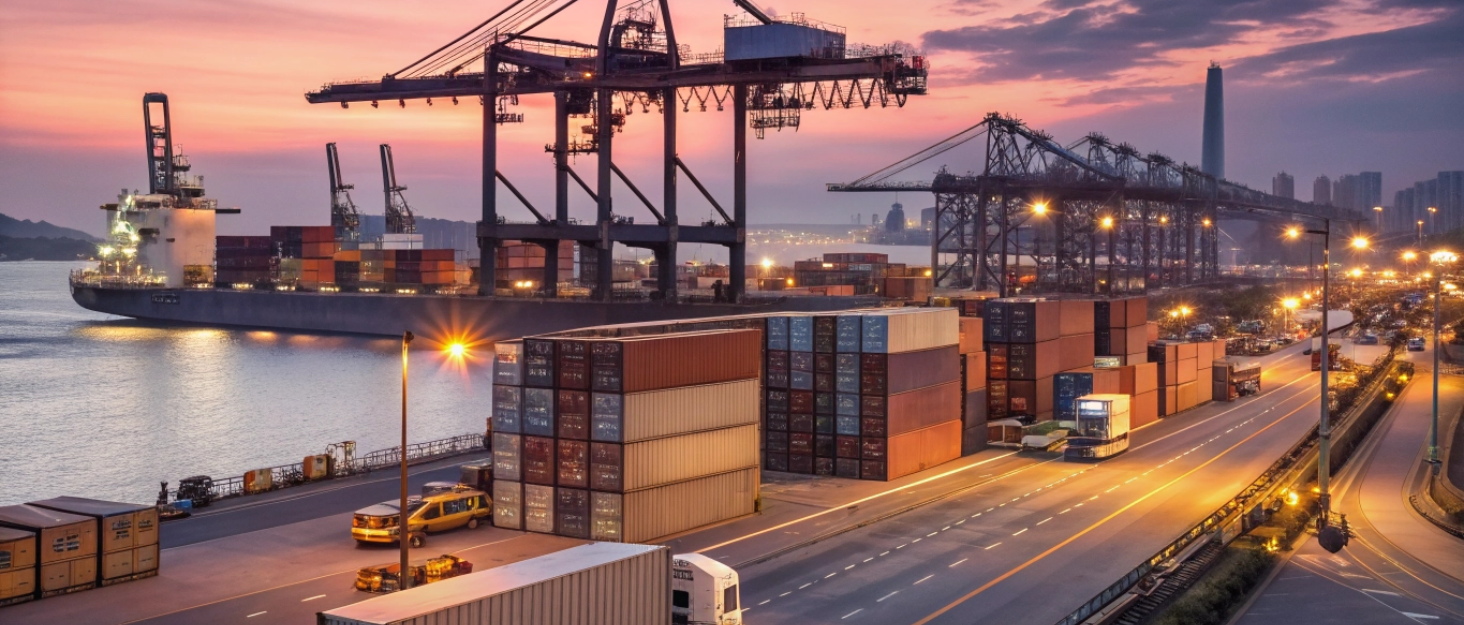
Holiday inventory is a timing game, and tariffs have rewritten the clock. To get ahead of rising duties, U.S. retailers pulled their holiday orders forward by four to six weeks this year, creating an unusually early peak shipping season.
Container volume at major U.S. ports · YoY
An early peak — then the tariff hangover
The National Retail Federation and Hackett Associates recorded a 13.2% year-over-year jump in container volume at major U.S. ports in June, then projected volumes falling steadily through the rest of 2026 as the front-loaded inventory gets drawn down.
The good news, per the NRF, is that most large retailers are “well stocked” for the season. The catch is what that readiness cost. Front-loading isn’t free: it pulls forward supplier payments, duties, freight, and warehousing, tying up working capital and inflating carrying costs long before a single unit sells. Freight rates climbed alongside the rush, with spot rates from Shanghai running into the several-thousand-dollars-per-container range on major lanes. The traditional holiday peak has effectively been displaced by a tariff-deadline calendar — a sprint to beat each new duty, followed by a lull.
For smaller brands and third-party sellers without the balance sheet to buy six months of stock at once, that trade-off is trickier to manage — but it’s far from unbeatable. With a bit of planning, it’s exactly the kind of challenge a prepared brand can turn into an edge.
What the last trade war already taught marketplace sellers
We don’t have to guess how this plays out on Amazon and Walmart — the 2025 tariff rounds, centered on China, already ran the experiment. The clearest lesson: marketplace sellers absorb the shock unevenly.
Average price increase · Jan–Sep 2025
Amazon raised prices more than twice as fast as its rivals
Why the gap? It’s structural: Amazon leans heavily on third-party sellers, who face sharper tariff exposure and have fewer levers to absorb the cost than a large first-party retailer. And those sellers are the core of the marketplace.
The rest of the 2025 data fills in the picture:
- The pain is worst in discretionary categories. Price increases concentrated in apparel, home goods, and beauty — the things people buy by choice rather than necessity. Prices rose fastest where consumers shop by choice, not need.
- Buyer behavior shifts. Purchase intent rose in the first half of 2025 while actual purchase rates fell, as shoppers researched early and held out for major discount events. When Prime Day arrived, demand snapped back — consumer electronics purchase rates jumped 3.8% and home & garden 4.6% year over year. The shopping journey is getting longer and more event-driven.
- The competitive field gets messier. The number of sellers grew 15.7% in the first half of 2025, while pricing violations rose 6.9% — more competitors and more MAP erosion, precisely when brand control matters most.
- The platform keeps winning either way. Even as seller margins compressed, Amazon’s third-party seller services revenue — commissions, advertising, and logistics fees — rose about 12%. The cost of doing business on the marketplace climbs regardless of who’s absorbing the tariff.
What smart brands are doing about it
Here’s the encouraging part: none of this is new, and none of it is unbeatable. Tariffs have been a moving target for two years now, and the brands that stay calm and prepared keep coming out ahead. A few realistic moves to get ready for the increase:
- Diversify your sourcing. Spread country-of-origin exposure so a single trade dispute can’t sink a whole season.
- Front-load with intention. Bring in your key SKUs early where it counts — but weigh carrying costs against tariff risk instead of panic-buying everything.
- Know your true landed cost. Reprice from real numbers, duties and freight included, so you’re adjusting deliberately rather than reacting to headlines.
- Protect your margin levers. Guard the Buy Box, enforce MAP, and keep distribution clean and authorized. When every point of margin is contested, control beats spend.
- Time your demand. Watch your velocity and lean into the discount events shoppers are already planning around — that’s where delayed demand tends to snap back.
Sources
- Washington Post; NPR; MPR News; Washington Times — U.S.–Canada tariff escalation coverage (Aug. 24–26, 2026)
- Wikipedia, “2025–2026 United States trade war with Canada and Mexico” — background timeline
- CNBC / CRE Daily — “Retailers are raising prices to meet tariffs. Amazon is hiking more than others,” DataWeave analysis (Nov. 2025)
- PYMNTS / Reuters — “Marketplaces’ Third-Party Sellers to Face Full Impact of Tariffs in Second Half” (May 2025)
- Nasdaq / Zacks — Amazon third-party seller tariff coverage (2025)
- Retail Dive / Wayvia — “Tariffs reshape shopping cycles and marketplace dynamics” (2025)
- NRF & Hackett Associates, Global Port Tracker — via Supply Chain Dive, Chain Store Age, Trucking Dive (Aug. 2026)
- Worldwide Logistics Group; Logfret; TechTimes — holiday front-loading and freight-rate coverage (2026)
